AI Can Hold a Coaching Conversation. Can It Create Lasting Change?
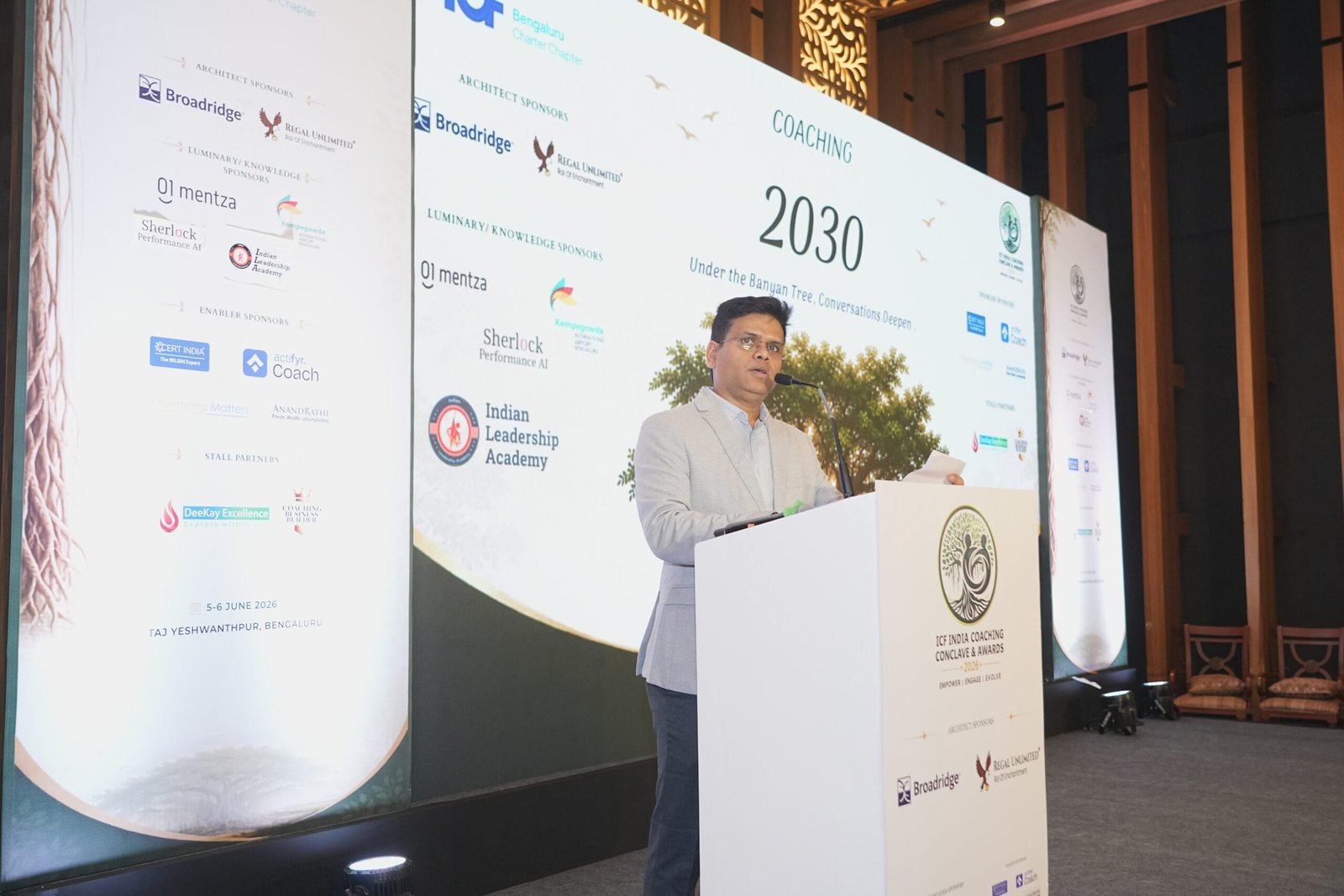
During the AI track at the ICF India Coaching Conclave & Awards 2026, two questions came together that are easy to mistake for one another.
Can AI conduct a useful coaching conversation?
Can that conversation produce meaningful and lasting change?
The first is increasingly a technical question. The second is a human and organizational one.
I hosted the two day Coaching Conclave at Hotel Taj, Bangalore on the theme – “The Augmented Coach: Leveraging AI and Digital Frontiers for 2030.” Across the wider conclave, coaches, leaders and practitioners were exploring what technology could make possible and what professional coaching must continue to protect.



The experience led me to a conclusion that extends beyond coaching.
Coaching is becoming an early test case for a challenge every enterprise will face: AI can scale assistance, but organizations must still determine how that assistance becomes sound judgment, changed behavior and accountable action.
AI can already create a useful coaching experience
AI coaching is no longer theoretical.
A capable system can help someone clarify a goal, examine assumptions, prepare for a difficult conversation or reflect on a decision. It can provide prompts between coaching sessions and make structured developmental support available when a human coach is unavailable.
This matters because traditional one-to-one coaching is resource intensive. In many organizations, access remains concentrated among senior executives and selected high-potential employees. AI could extend some forms of developmental support to a much wider population.
Early research supports this possibility, but the findings need to be interpreted carefully.
A randomized study comparing a generative AI coaching chatbot with a scripted, rules-based chatbot found that the generative system performed better across measures related to technology adoption, self-determination and perceived efficacy. This tells us that generative AI can create a better experience than a rigid scripted system. It does not tell us that it performs as well as a human coach.
Another experiment compared AI chatbots based on three coaching approaches: GROW, solution-focused coaching and cognitive behavioral coaching. The results differed by coaching model, with the CBT-based chatbot performing more strongly across several measures.
This is an important finding. The quality of AI coaching depends on more than the fluency of the underlying language model. The developmental method, interaction design and intended outcome also matter.
A 2026 randomized controlled study asked a different and harder question. It compared automated AI coaching with coaching delivered by accredited human coaches. In that experiment, substantial improvements across the measured coaching outcomes were found for the human coaching condition, not for the AI coaching condition.
The study involved 114 participants and one experimental configuration. It should not be treated as a permanent boundary on what future systems might achieve. It does, however, challenge the assumption that a fluent coaching conversation is equivalent to an effective coaching relationship.
Taken together, these studies suggest three conclusions:
- Generative AI can provide a better coaching experience than older scripted systems.
- The coaching method embedded in an AI system affects its results.
- A better AI interaction does not, by itself, establish equivalence with human coaching.
AI coaching is becoming more capable. The evidence for replacing human coaching, especially in complex developmental work, remains unsettled.
Assistance is not the same as change
The word “coaching” covers activities with very different levels of complexity.
Preparing for a presentation, reviewing a goal and rehearsing a feedback conversation are structured developmental tasks. AI may be highly useful in these situations.
Helping a leader confront the possibility that their own behavior is damaging the team is different. So is working through an ethical dilemma, a loss of professional identity or a conflict involving several powerful stakeholders.
In these situations, the value of coaching is not confined to generating relevant questions.
It includes the quality of attention between two people. It includes the trust that allows something difficult to be said, the judgment to challenge without pushing the client toward a predetermined answer and the ability to interpret an issue within the client’s wider organizational context.
More importantly, development must survive contact with reality.
A leader may leave a conversation with a compelling insight. That insight becomes consequential only when it changes how the leader behaves in a tense meeting, allocates authority, responds to disagreement or makes a difficult decision.
AI can help produce reflection. Leadership development requires that reflection to survive contact with relationships, incentives and real decisions.
That is what I mean by meaningful change. It is not a moment of insight or a positive rating after a conversation. It is a durable shift in judgment or behavior that remains visible when the person returns to the environment that helped create the problem.
Human coaches do not always produce such change. AI systems are not incapable of contributing to it. The point is that conversational quality alone is an inadequate measure.
Why this matters beyond coaching
Many enterprise AI initiatives contain the same category error.
An organization automates a task and assumes that it has improved the outcome.
AI may generate a market analysis, but the organization must still decide which signals to trust. It may propose several strategies, but leaders must make trade-offs and commit resources. It may draft a difficult message, but the sender remains responsible for the relationship and its consequences.
In each case, the AI system provides assistance. Value appears only when that assistance improves judgment and action within a particular organizational context.
This conversion is difficult because enterprises are not neutral environments. Decisions are shaped by incentives, authority, culture, competing objectives and uneven access to information.
An AI recommendation that appears sensible in isolation may fail when it meets these conditions. A coaching prompt that sounds insightful may similarly fail to change anything if the surrounding system rewards the old behavior.
The central leadership challenge is therefore not simply deciding what AI can do. It is designing work so that machine assistance strengthens human judgment without obscuring human accountability.
Coaching reveals this challenge early because the intended outcome is not a document or prediction. It is a change in how someone thinks, decides or acts.
Where should AI coaching end and human involvement begin?
The answer should not be based on a universal claim that AI is either suitable or unsuitable for coaching.
Organizations can make a more disciplined decision by evaluating three factors.
Consequence
What happens if the guidance is shallow, biased or wrong?
Practicing a routine conversation carries different consequences from navigating an executive conflict, a potential ethics violation or a major career decision. As the consequence of poor guidance rises, so should the level of human oversight.
Context
How much personal and organizational understanding does the situation require?
A structured goal may require limited context. A problem involving power, culture, identity and several stakeholders may not make sense outside the system in which it occurs.
AI can process large amounts of supplied context. That does not mean the organization should disclose every piece of sensitive information to it or assume that the system understands the context as an experienced human might.
Relationship
Is a trusted human relationship part of how change is expected to occur?
For some developmental needs, the value lies primarily in structured reflection and practice. For others, progress depends partly on being witnessed, challenged and held accountable by another person.
When relationship is part of the mechanism, removing the person may change the intervention itself.
These factors suggest a practical portfolio:
- Low-consequence, structured and low-context needs may be suitable for AI-led support.
- Moderate-complexity needs may benefit from hybrid coaching, with AI supporting preparation, reflection and follow-through around human sessions.
- High-consequence, ambiguous and relationship-dependent situations warrant qualified human involvement.
The boundaries will evolve as the evidence and technology improve. The principle should remain: match the form of assistance to the nature of the developmental need.
Responsible augmentation requires more than a good interface
The International Coaching Federation’s AI Coaching Framework and Standards reflect this wider responsibility. The framework addresses ethics, the coaching relationship, communication, learning, testing, privacy, bias and accessibility.
That breadth is necessary because a system can feel helpful while still creating institutional risk.
A coaching tool may improve continuity by remembering previous conversations while increasing the exposure of sensitive personal data. It may encourage engagement by responding supportively while becoming excessively agreeable. It may offer personalized recommendations while reproducing biases embedded in its design, data or evaluation criteria.
Fluency makes these risks harder to notice because an articulate answer can appear more authoritative than it is.
Organizations procuring AI coaching systems therefore need to examine more than usability and employee adoption. They should understand:
- what data the system collects and retains;
- who can access coaching conversations or derived insights;
- how the system is evaluated for bias and harmful guidance;
- when it directs someone toward qualified human support;
- what evidence supports its developmental claims;
- and who remains accountable when the system fails.
These are technology, leadership and governance questions at the same time.
Four disciplines. One outcome.
Organizations realize their potential when strategy, leadership, AI and execution work as one system. AI-enabled coaching provides a practical way to see why these four disciplines cannot be separated.
Strategy
Chooses what matters.
Clarifies direction, priorities and the choices that shape long-term success.
For AI-enabled coaching, strategy defines the developmental outcomes that matter, the populations to support and the risks the organization is willing to accept.
Leadership
Builds capability.
Develops people, creates ownership, aligns teams and enables adaptation.
Coaching belongs most directly here. AI may support development, but leadership remains responsible for creating the conditions in which reflection becomes changed behavior.
AI
Amplifies intelligence.
Improves decisions, accelerates learning and scales human and organizational capability.
In coaching, AI can extend reflection, practice, preparation and support. The objective is purposeful amplification, not maximum automation.
Execution
Turns intent into outcomes.
Converts strategy into action through disciplined delivery, learning and measurable results.
For AI-enabled coaching, this includes privacy, escalation, adoption, outcome measurement and continuous improvement.
These four disciplines do not operate as a sequence. They continually shape one another.
Evidence gathered during execution should change strategic choices. Leadership experience should influence how the AI system is designed and governed. AI-generated insight should help leaders improve how they develop people. Strategy should keep all three focused on outcomes that matter.
That is the difference between deploying an AI coaching tool and building an effective developmental system.
Reinvention remains a human responsibility
The World Economic Forum’s Future of Jobs Report 2025 estimates that 39 percent of workers’ key skills will change by 2030. AI and big-data skills are rising rapidly, but so are resilience, flexibility, curiosity, lifelong learning, leadership and social influence.
This combination matters. Enterprises need technical fluency and the capacity to adapt behavior, roles and assumptions as the technology changes.
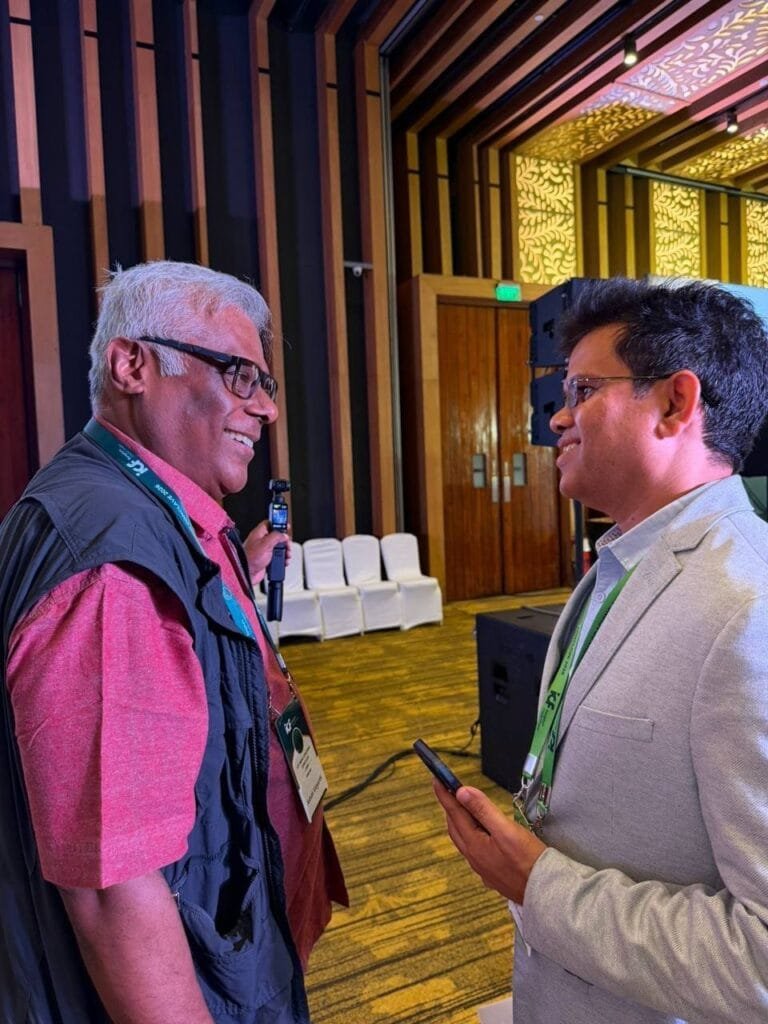
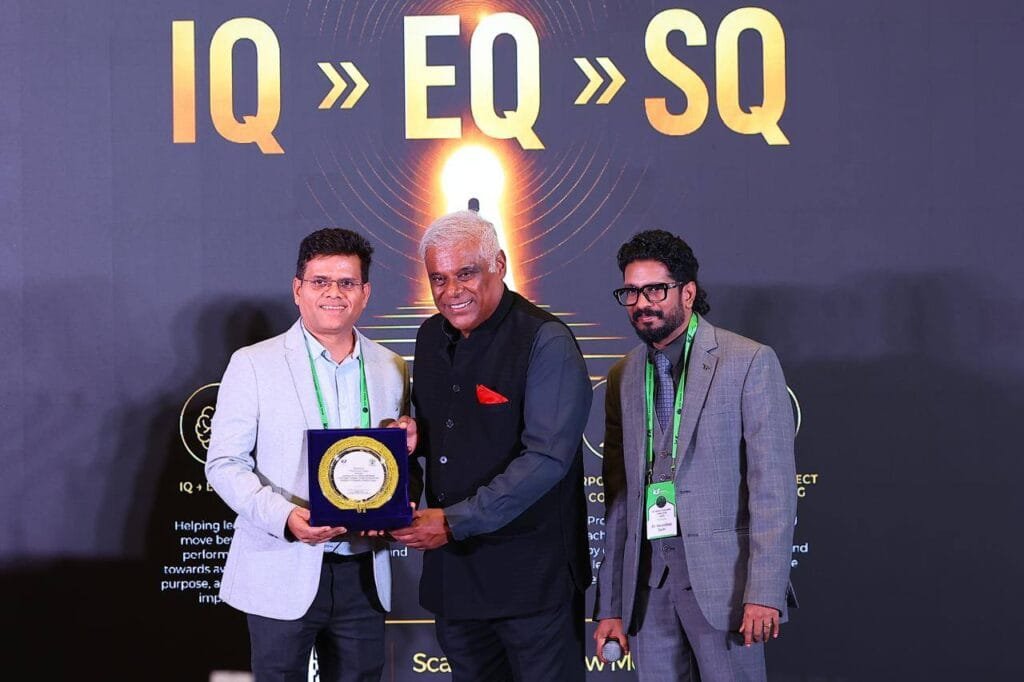
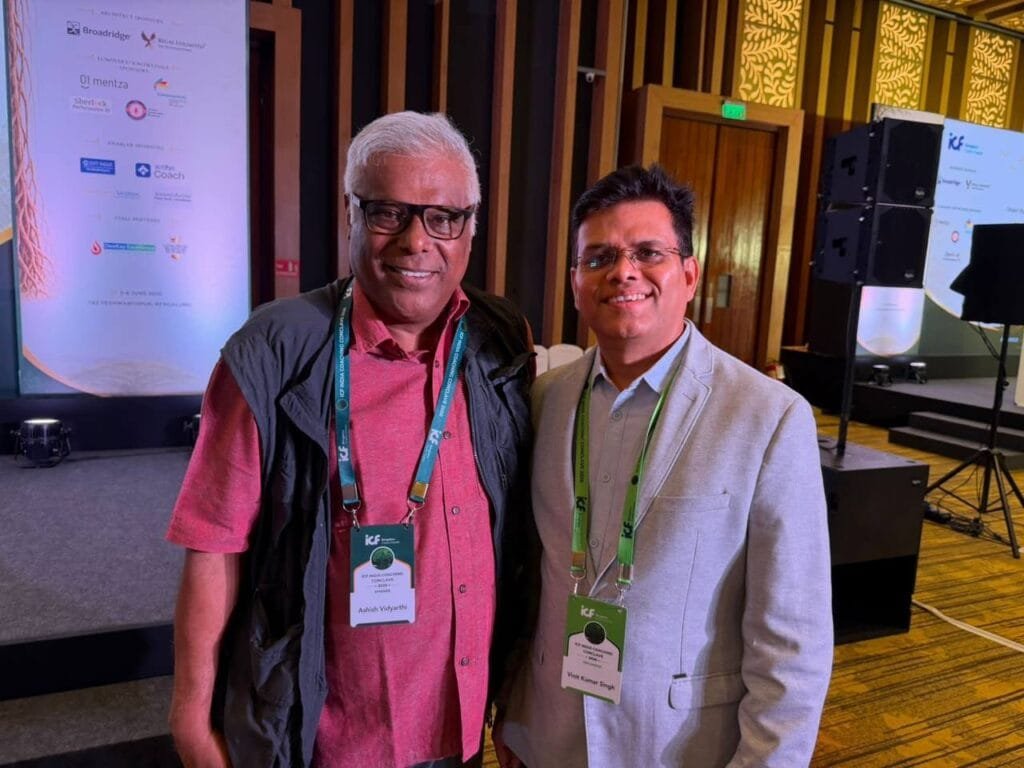
After two days focused on Coaching for 2030, Ashish Vidyarthi’s closing reflections brought the discussion back to this human capacity. In his own account of the event, he described himself as a continuing “Vidyarthi of life,” learning through people, conversations, failures, detours and new beginnings.
The relevance of that message was reinvention.
AI may make advice, analysis and structured reflection more accessible. But leaders and organizations must still be willing to question familiar identities, confront inconvenient evidence and change established behavior.
No organization can outsource that willingness to a tool.
The question enterprises should carry forward
The future of coaching is unlikely to be resolved by declaring either human coaches or AI systems the winner.
The more useful question is:
Which combination of human and machine capability is appropriate for this person, this purpose and this level of consequence?
AI can broaden access to reflection, preparation and practice. Used responsibly, it may allow human coaches and leaders to spend more time on situations where context, judgment and relationship matter most.
But an intelligent response is only the beginning.
Strategy must choose the developmental outcomes that matter. Leadership must build the capability to achieve them. AI should amplify intelligence and learning. Execution must turn those intentions into governed, measurable results.
Four disciplines. One outcome.
The defining difference may not be between organizations that adopt AI and those that do not. It may be between organizations that use AI to generate more assistance and those that build the complete system required to convert augmented intelligence into meaningful change.

Continue the conversation
Receive thoughtful, research-backed essays on strategy, leadership, AI and execution. New writing when there is something worth sharing.
Confirm your subscription by email. Unsubscribe at any time.
References
- International Coaching Federation: Artificial Intelligence Coaching Framework and Standards
- International Coaching Federation: Coaching and Technology
- International Coaching Federation: 2025 ICF Core Competencies
- Erik de Haan, Nicky Terblanche and Kenneth Nowack: A randomised controlled comparison of human and AI chatbot coaching
- Nicky Terblanche, Rebecca Rutschmann and Jonathan Reitz: Comparing GROW, solution-focused and CBT coaching chatbots
- Nicky Terblanche: Smooth Talking: Generative Versus Scripted Coaching Chatbot Adoption and Efficacy Comparison
- World Economic Forum: Future of Jobs Report 2025, Skills Outlook
- Microsoft: 2026 Work Trend Index, Agents, Human Agency, and Opportunity
- Ashish Vidyarthi: Reflection following the ICF India Coaching Conclave 2026
- ICF Bengaluru: ICF India Coaching Conclave 2026
