AI Is Not Removing Jobs. It Is Removing Average Work.
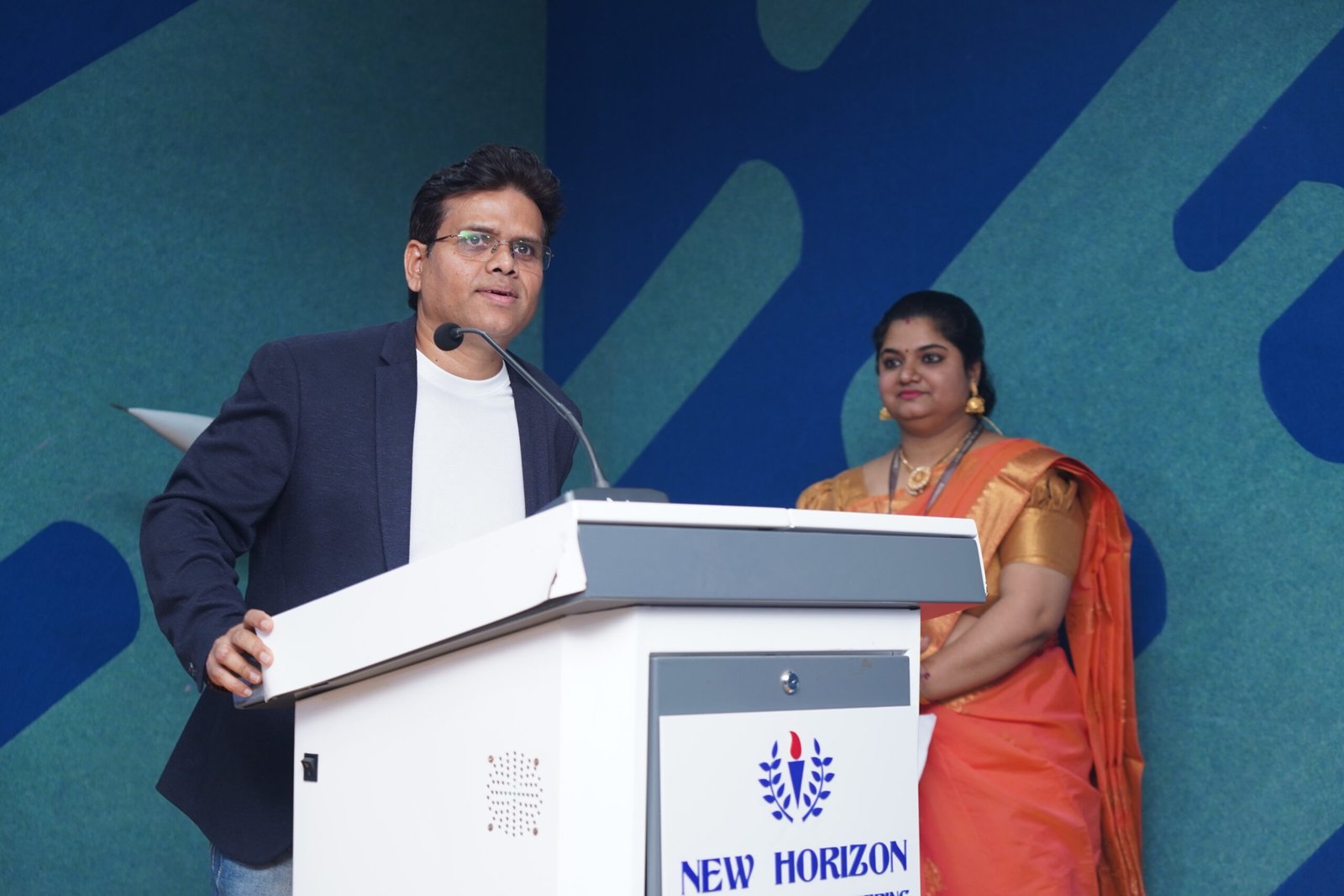
Reflections from the IEEE Biometrics Council inauguration at New Horizon College of Engineering
A few weeks ago, we hired a few freshers into our team.
When I sat down with them, most of them said some version of the same thing.
“There’s so much to learn right now. AI, data science, new tools every week. We don’t even know what actually matters.”
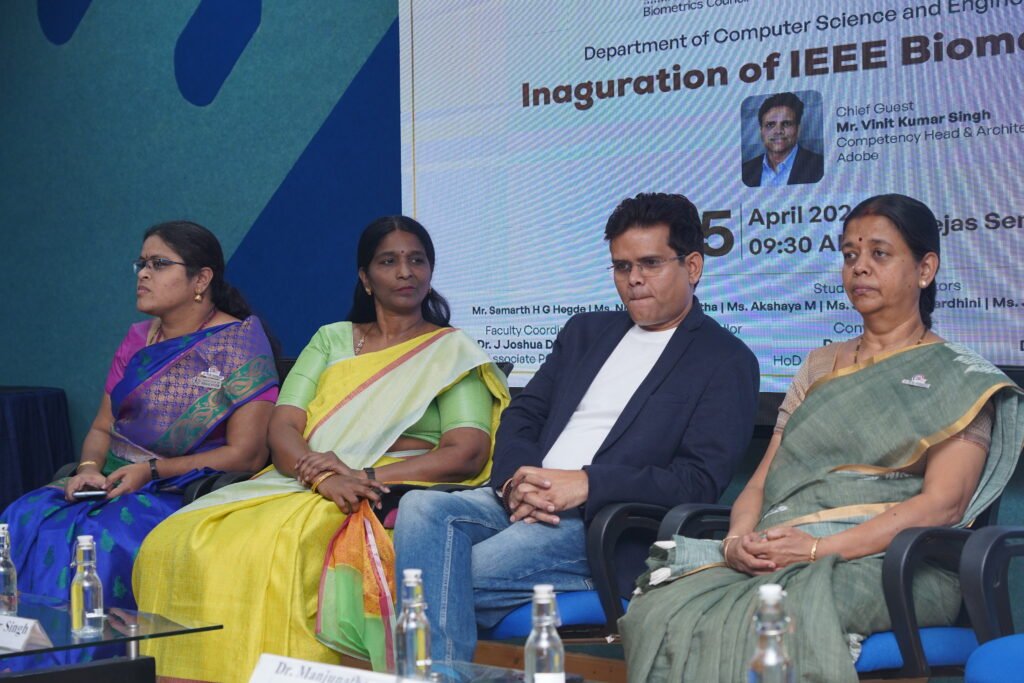
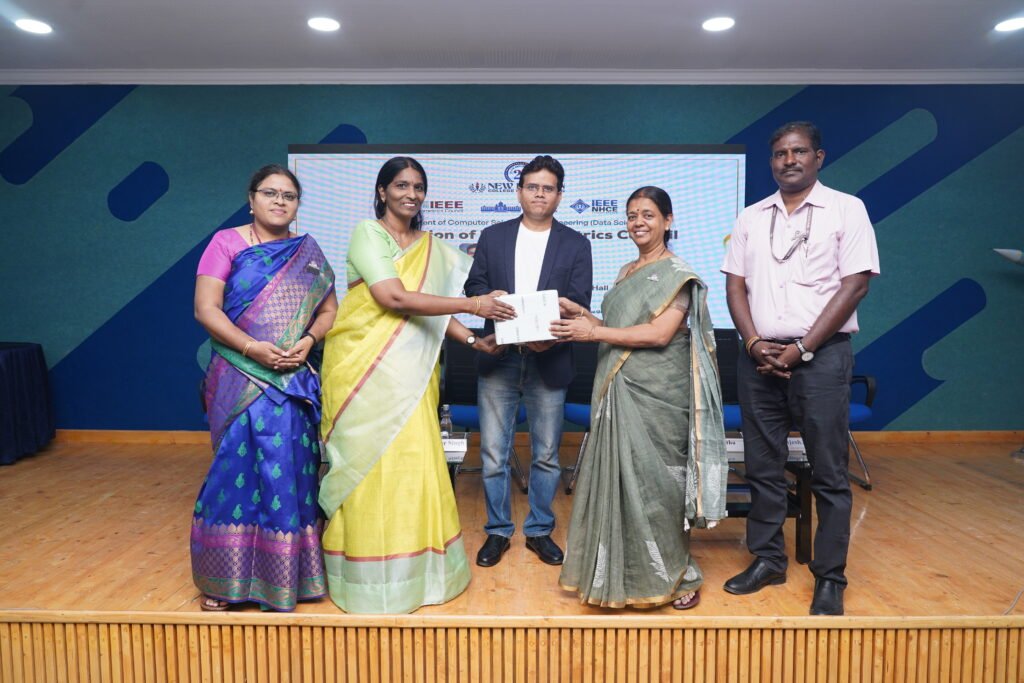
That sentence stayed with me. Because I heard it again, almost word for word, last week while addressing students as Chief Guest at the inauguration of the IEEE Biometrics Council chapter at New Horizon College of Engineering.

The students kept circling back to one question.
“What should I learn so I stay relevant in an AI-driven world?”
It is the most honest question of this moment. And it is not a student question. It is being asked quietly inside every enterprise I work with, by professionals who are two, ten, and twenty years into their careers. The students just ask it out loud because they have no incumbent advantage to cushion the impact.
We are at an inflection point
AI is not just another technology wave.
Every week a new tool does something faster, cheaper, and sometimes better than a human. The real challenge is not that AI is improving. It is that AI is improving faster than most of us can adapt.
When I started my career more than two decades back, I was building web applications in ASP.NET with C#, writing backend logic and debugging line by line. Something that felt reasonably complex would take hours. Today AI generates that code in seconds.
Sometimes I think: if this had existed when I started out, I would have finished my work much faster. Or I would have had to work much harder to stay relevant.
Probably both.
The real question is not about AI taking jobs
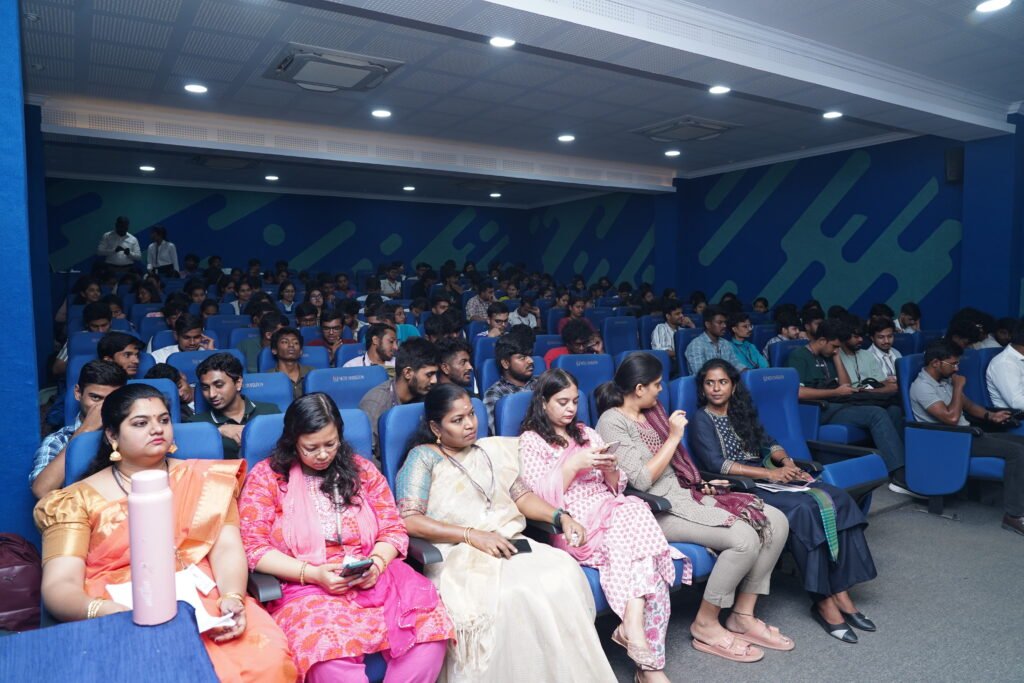
In my session I asked the students a simple question. How many of you are already using AI tools for your assignments and projects?
Almost every hand went up.
Good. That is exactly why this conversation matters.
Because the real question is no longer “will AI take jobs?” It is:
“How will you stay valuable when everyone has access to the same tools?”
That is a harder question. And the answer has almost nothing to do with which tools you know.
AI is not removing jobs. It is removing average work.
AI will not replace people who solve real problems. It will replace those who don’t.
The uncomfortable truth is that doing average work is becoming very risky.
The first-draft report that nobody reads carefully. The analysis that restates what everyone already knew. The code that solves a problem a thousand others have already solved. All of this is being automated first, at every level, from intern to director.
The bar is moving up. Not in one profession. In all of them.
And the question every professional should be sitting with, not just students, is how do you stay above it.
Three things that will matter more than any tool
I told the students: if you are thinking about your future, focus on three things.
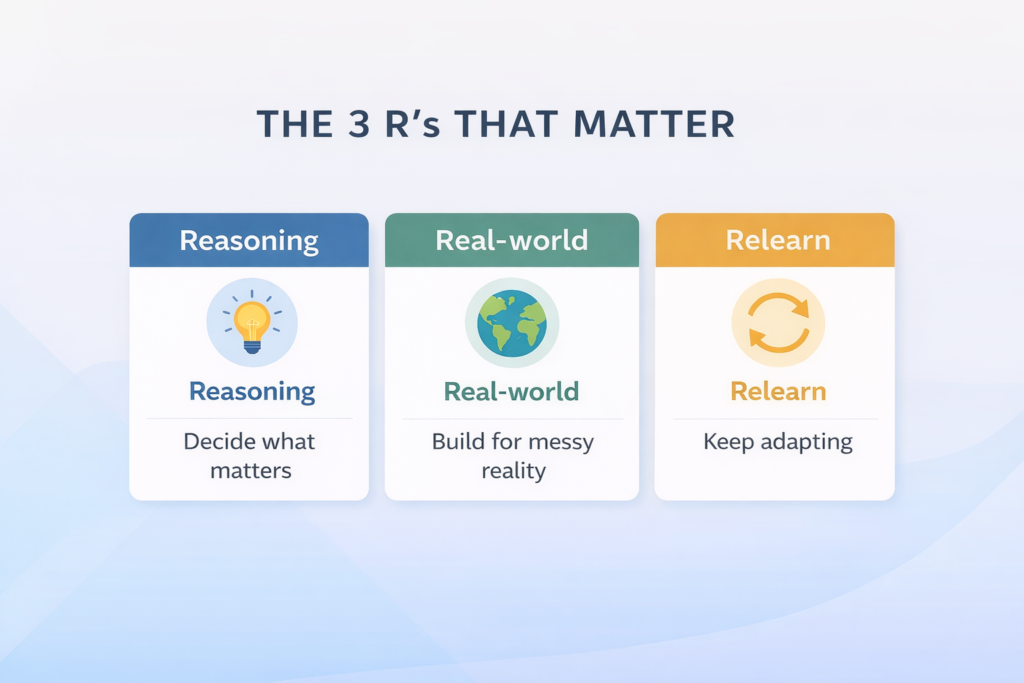
First, do not compete with AI on speed. Compete on judgment. AI can give you an answer in seconds. What it cannot do is decide what actually matters. A good engineer of the next decade will not be the one who codes the fastest. It will be the one who looks at an AI-generated answer and knows, quickly, whether it is right, wrong, or dangerously plausible. That judgement is on no syllabus and no certification. It is earned.
Second, do not stop at the model. Focus on real-world use. This is the gap that separates a student from a professional, and it has become wider, not narrower, in the age of AI. Most solutions do not fail in the code. They fail in the messy real world where people, constraints, legacy systems, and actual users turn a clean solution into an unusable one. The more AI generates the first draft, the more this second skill becomes the premium one.
Third, do not just learn once. Learn how to relearn. The half-life of what you learn today is shorter than ever. Whatever framework or tool you become an expert in this year may not be the thing that matters three years from now. Resilience is no longer a soft skill. The ability to let go of what you knew and learn the next thing, without losing your footing, is the core technical skill of this decade.
Notice what is not on the list. Specific languages. Specific libraries. Specific frameworks. Those will keep changing. The three above will not.
Why biometrics matters more, not less
The event itself was the inauguration of an IEEE Biometrics Council chapter, and there is a reason that theme is timely rather than coincidental.
Biometrics is really about identity.
And in a world where AI can generate faces, voices, and entire personalities, identity itself becomes a challenge.
Think about it this way. What if someone else could unlock your phone using your face?
In the digital world everything now depends on one question. Is this really you? Your bank account depends on it. Your devices depend on it. Your data, your access, your entire digital self depends on it.
Biometrics is no longer a convenience feature. It is the trust layer of the AI economy.
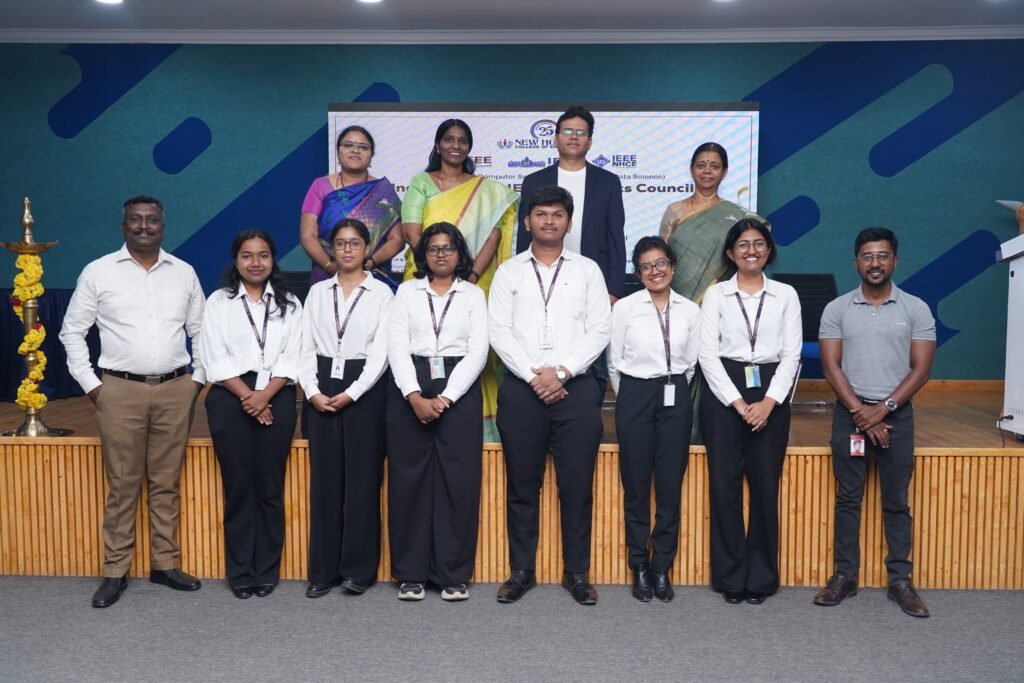
AI does not fail in labs. AI fails in the real world. And when it fails in something like identity, the consequences are real.
The students walking into this chapter today are not working on a niche specialisation. They are working on the problem that every bank, every government, and every enterprise platform will be solving for the next decade.
That is a serious place to start a career.
What the faculty are seeing
One of the most valuable parts of the visit was the conversation afterwards with Dr B Swathi, HoD of Data Science, and Dr Revathi V, Dean, R&D, on how AI is already reshaping what they teach and what they expect from students.
Three things from that conversation stayed with me, and I think they matter for anyone hiring or building teams, not just for academia.
The half-life of curriculum is collapsing. A data science syllabus designed two years ago is already being revised. Not because the fundamentals changed, but because the tooling shifted underneath the fundamentals. The institutions adapting fastest are the ones teaching students how to evaluate tools rather than how to use a specific tool.
Employability is no longer about skill stacking. For a decade the advice was: learn more, certify more, stack more on your CV. That advice has quietly expired. Employers today want to see whether a candidate can frame a problem, test a hypothesis, and judge whether an AI-generated answer is actually right. Every hiring manager I speak to is calibrating on exactly this.
The faculty role itself is changing. When a student can generate a passable answer to any textbook question in thirty seconds, the faculty’s job shifts from transferring knowledge to building discernment. That is a harder job. It is also a more important one. The institutions having this conversation openly are further ahead than they realise. Most are not.
The question worth sitting with
Most career advice today still sounds like the advice from ten years ago with a thin layer of AI on top. Learn Python. Do projects. Build a portfolio. All still useful. None of it sufficient.
The real question is no longer “what should I learn?”
It is:
“What should I focus on that AI cannot easily replace, and what evidence do I have that I am actually getting better at it?”
The second half of that question is the part most people skip. It is the part that matters.
The students asking this question openly are already ahead of most working professionals twice their age. The future will not reward people who just use tools. It will reward people who can decide well, deliver in the real world, and adapt continuously.
Those three words are the job description of the next decade.
For students. For engineers. For leaders. For all of us.
Continuing this conversation on LinkedIn, join in if you have a perspective.
Thank you!
Grateful to New Horizon College of Engineering, Dr B Swathi, Dr Revathi V, and the IEEE Biometrics Council team for a genuinely sharp conversation. The students who turned up with questions are the reason these sessions are worth doing.
Continue the conversation
Receive thoughtful, research-backed essays on strategy, leadership, AI and execution. New writing when there is something worth sharing.
Confirm your subscription by email. Unsubscribe at any time.
